Polar bear facts
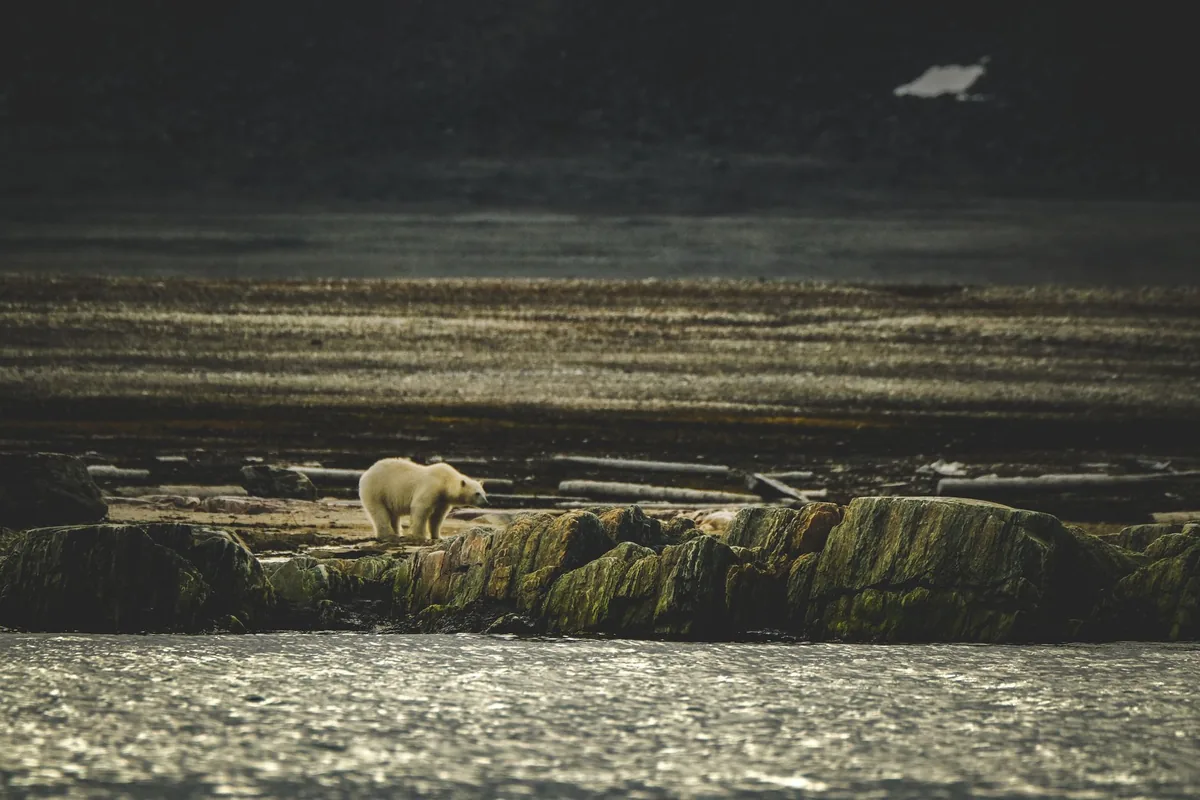
The polar bear holds the distinction of being the largest land carnivore on Earth. Although classified as a land mammal by taxonomy, it is designated a marine mammal because of its dependence on Arctic sea ice as a critical platform for hunting. This reliance fundamentally shapes its ecology and survival, making it inseparable from the marine environment it inhabits.
Polar bears are superbly adapted to their frozen habitat. Their fur repels water, and a thick layer of blubber insulates them against extreme cold, enabling sustained activity in and around Arctic waters. They are powerful swimmers, using these capabilities to navigate between ice floes and pursue their primary prey: seals. Their hunting success depends almost entirely on access to stable sea ice where seals rest and breathe at surface holes.
The polar bear has become an iconic symbol of the Arctic, recognized globally as emblematic of the region's unique wildlife. In this regard, its conservation status parallels that of another Arctic flagship species, the narwhal. Both species face a shared ecological threat: the stability of sea ice that sustains them. As Arctic sea ice extent and thickness continue to change in response to climate patterns, the future of polar bear populations remains directly tied to the fate of the frozen habitat upon which they depend.
Sources: NOAA / U.S. FWS — Polar Bear; IUCN Red List — Polar Bear (Ursus maritimus). Educational information only. See our sources & fact-check policy.
Frequently asked questions
How big is the polar bear?
The polar bear grows to about about 2–3 m and can weigh up to ~700 kg.
What does the polar bear eat?
Its diet is mainly mainly seals.
Where does the polar bear live?
It is found in the arctic sea ice, circumpolar.
Is the polar bear endangered?
The IUCN Red List classifies the polar bear as Vulnerable. Its estimated population is ~22,000–31,000.
More in Arctic wildlife
Compare the Arctic species
See size, weight, lifespan, diet, range, and conservation status side by side.
Compare Arctic species →