The narwhal tusk
See all narwhal pictures & images →
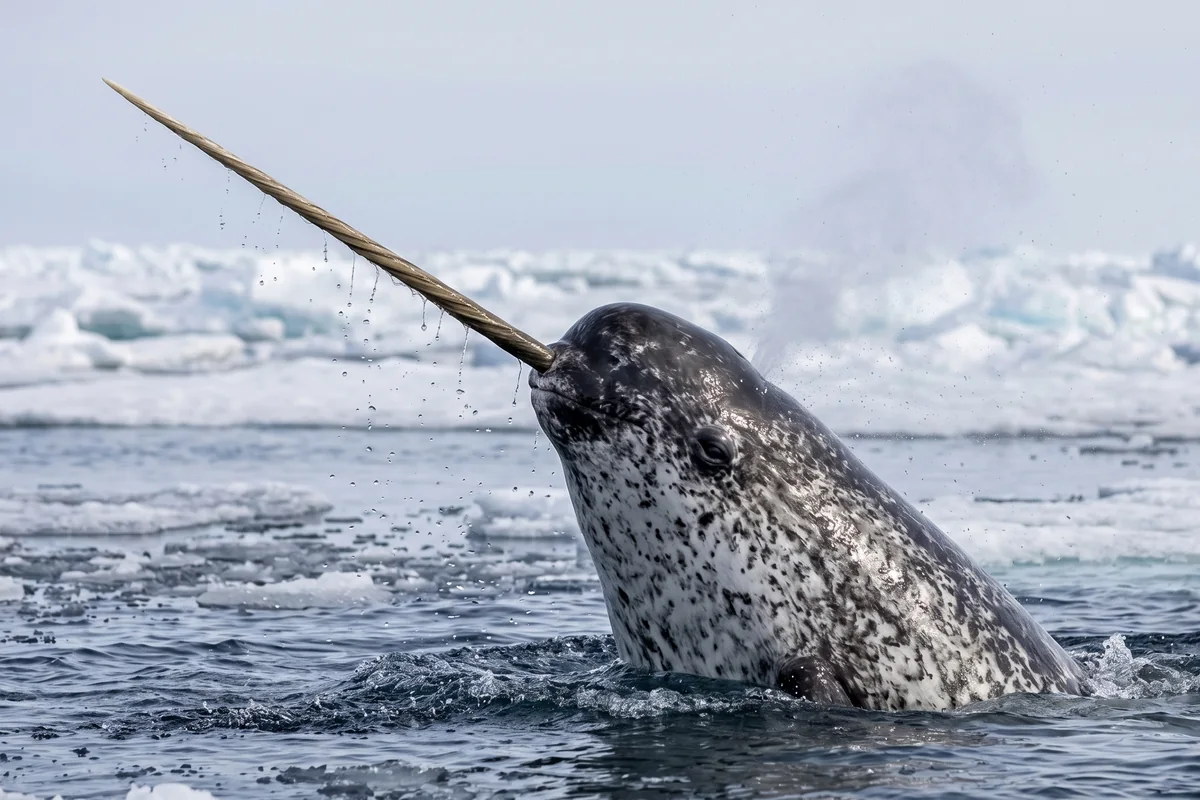
The narwhal tusk is actually the left front tooth of the male which projects up to 3 meters; the length is dependant on the whale and the age.
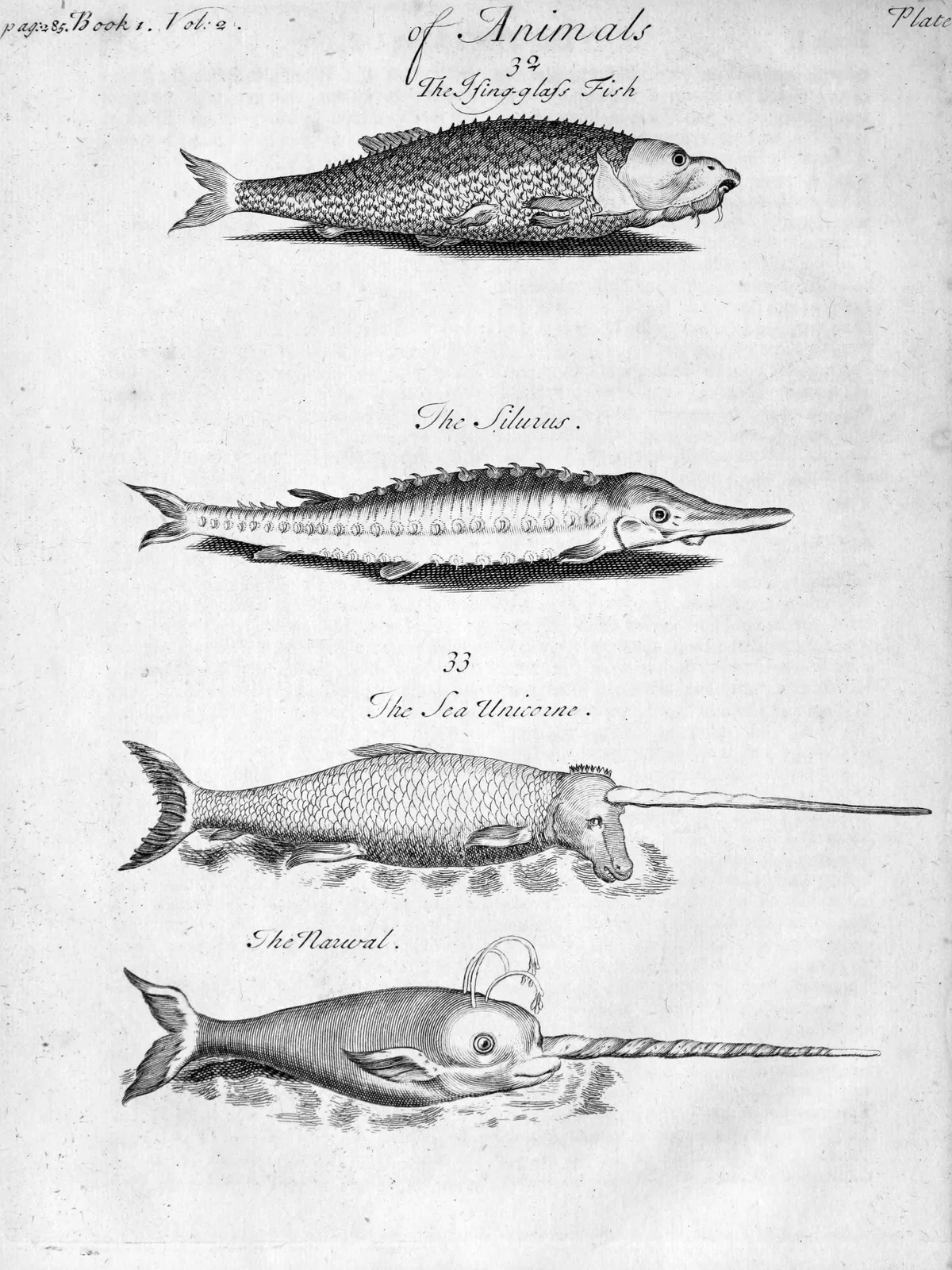
The tusk of the narwhal was sold by Vikings and other northern traders as the horn of the legendary unicorn which were considered to have magic powers. Reportedly, during the sixteenth century, Queen Elizabeth purchased a narwhal tusk for the cost of ten thousand pounds - the cost of a castle. The tusk was used as her scepter.
The tusk is believed to be a integral part of the mating process, as the males have often been seen crossing tusks during mating season, as well as using them during fighting for dominance and the right to mate with the female narwhals. Female narwhals have a shorter, and straighter tusk.
Even though the tusks grow with age, there is currently no reliable way of determining the age of a narwhal.
Updated & expanded — current sourced facts
The reference notes below were added by the Narwhal Whales editorial team to bring the original article up to date with current, sourced facts (IUCN Red List, NOAA Fisheries, NAMMCO). They supplement — and do not replace — the original article above.
The narwhal's most distinctive feature is not a horn but a tooth—a greatly enlarged left canine that erupts through the upper lip and spirals counter-clockwise as it grows. This remarkable tusk can reach approximately three metres in length and is present in most males, though females occasionally develop one as well. Far from being a simple appendage, the tusk is densely packed with millions of nerve endings, making it an extraordinarily sensitive sensory organ. This rich nerve supply suggests the tusk functions as a biological tool for detecting changes in the environment—temperature, pressure, salinity, and particle concentration in Arctic waters—as well as a probable signal of male fitness and breeding status.
For centuries, the tusk's otherworldly appearance sparked global commerce and legend. Norse and northern traders sold narwhal tusks to European markets, where they were marketed as horns of the mythical unicorn and attributed with magical healing properties and supernatural powers. The sixteenth-century English court was reportedly no exception; Queen Elizabeth I is recorded as having paid an enormous sum for a single tusk. These magical claims became deeply embedded in Renaissance culture and persisted for centuries.
Modern science has discarded the folklore in favour of documented fact. The narwhal tusk remains one of nature's most remarkable teeth—a sensory powerhouse adapted to life in the Arctic, a sign of male vitality, and a legitimate biological wonder that requires no mythical explanation to inspire genuine fascination.
This page updates and corrects an original narwhalwhales.com article with current, sourced facts.
Sources: NOAA Fisheries — Narwhal; IUCN Red List — Narwhal (Monodon monoceros); Smithsonian Ocean — Narwhal: The Unicorn of the Sea. Educational information only. See our sources & fact-check policy.
Frequently asked questions
What it is of the the narwhal tusk?
An enlarged, spiralled canine tooth (usually the left)
Who has it of the the narwhal tusk?
Mainly males; a minority of females grow a smaller one
Length of the the narwhal tusk?
Up to about 3 m (10 ft)
More in Narwhal
Explore more Arctic wildlife
Compare the narwhal with the beluga, bowhead, orca, walrus, and polar bear in our quick-facts table.
Compare Arctic species →