Narwhal threats from shipping

See all narwhal pictures & images →
As Arctic sea ice continues to retreat due to climate change, shipping routes through narwhal habitat are expected to expand significantly. This opening of previously ice-locked passages promises economic benefits for maritime commerce but introduces mounting pressure on one of the Arctic's most specialized marine mammals. Narwhals face a novel suite of threats from this expanding industrial activity, fundamentally altering their relationship with the waters they inhabit.
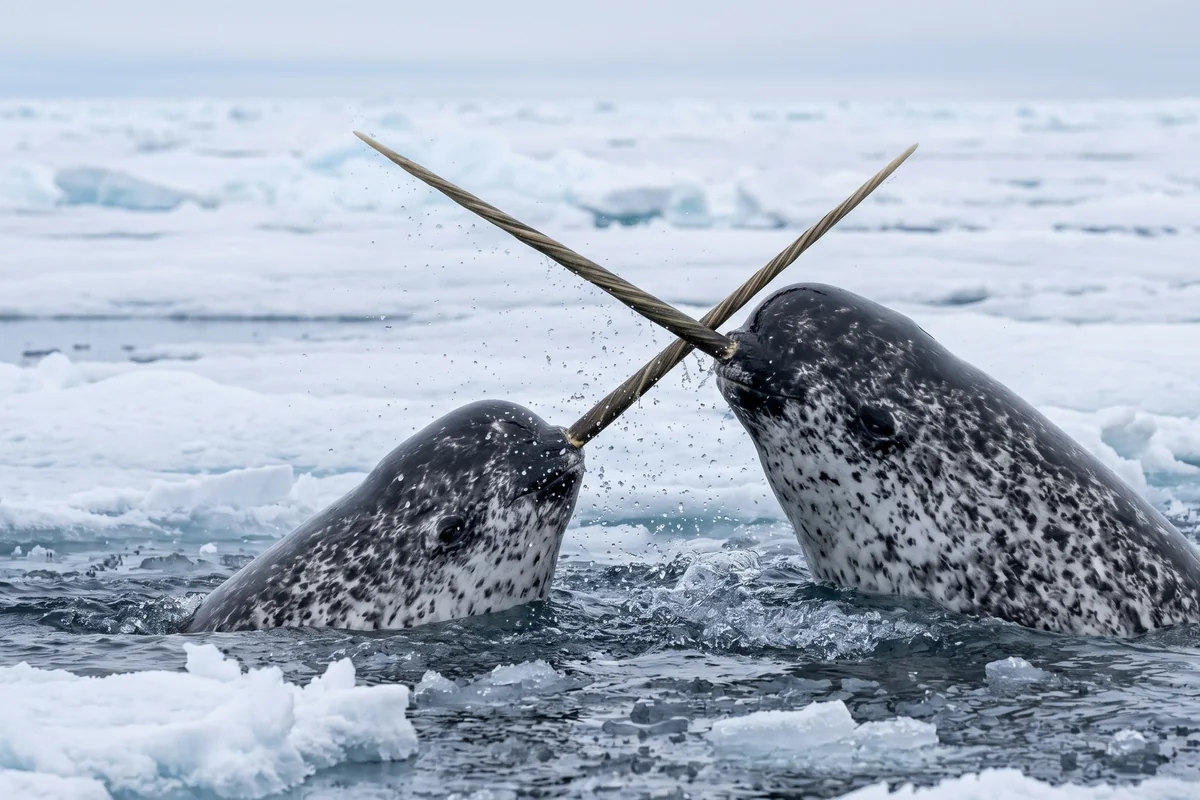
Sound plays a central role in narwhal biology. These Arctic cetaceans depend heavily on acoustic communication and echolocation for navigation, social interaction, and hunting. Underwater noise from vessel engines and operations penetrates their habitat with disruptive force, and narwhals have demonstrated pronounced sensitivity to such disturbance, often reacting strongly to ship noise even at considerable distances. This sensitivity is particularly concerning because narwhals operate within acoustic environments already shaped by other industrial and natural sound sources.
Beyond noise, increased shipping introduces direct physical hazards. Ships can displace narwhals from traditional migration routes and preferred feeding and overwintering grounds, forcing the animals to expend additional energy seeking alternative habitat. Collisions between vessels and narwhals remain a documented risk, though the full scope of strike incidents remains incompletely understood. The conservation challenge is compounded by narwhals' conservative movement patterns—the species returns to the same geographic areas year after year and maintains relatively limited home ranges, leaving populations with few options to avoid growing shipping traffic.
With industrial activity in the Arctic expanding and ice retreat expected to accelerate, managing shipping impacts on narwhal populations has become a recognized priority in long-term conservation planning.
Sources: IUCN Red List — Narwhal (Monodon monoceros); NOAA Fisheries — Narwhal. Educational information only. See our sources & fact-check policy.
Frequently asked questions
Key sensitivity of the narwhal threats from shipping?
Strong reactions to underwater vessel noise
Driver of the narwhal threats from shipping?
Less sea ice opening new shipping routes
More in Narwhal
Explore more Arctic wildlife
Compare the narwhal with the beluga, bowhead, orca, walrus, and polar bear in our quick-facts table.
Compare Arctic species →