Narwhal teeth and tusk anatomy
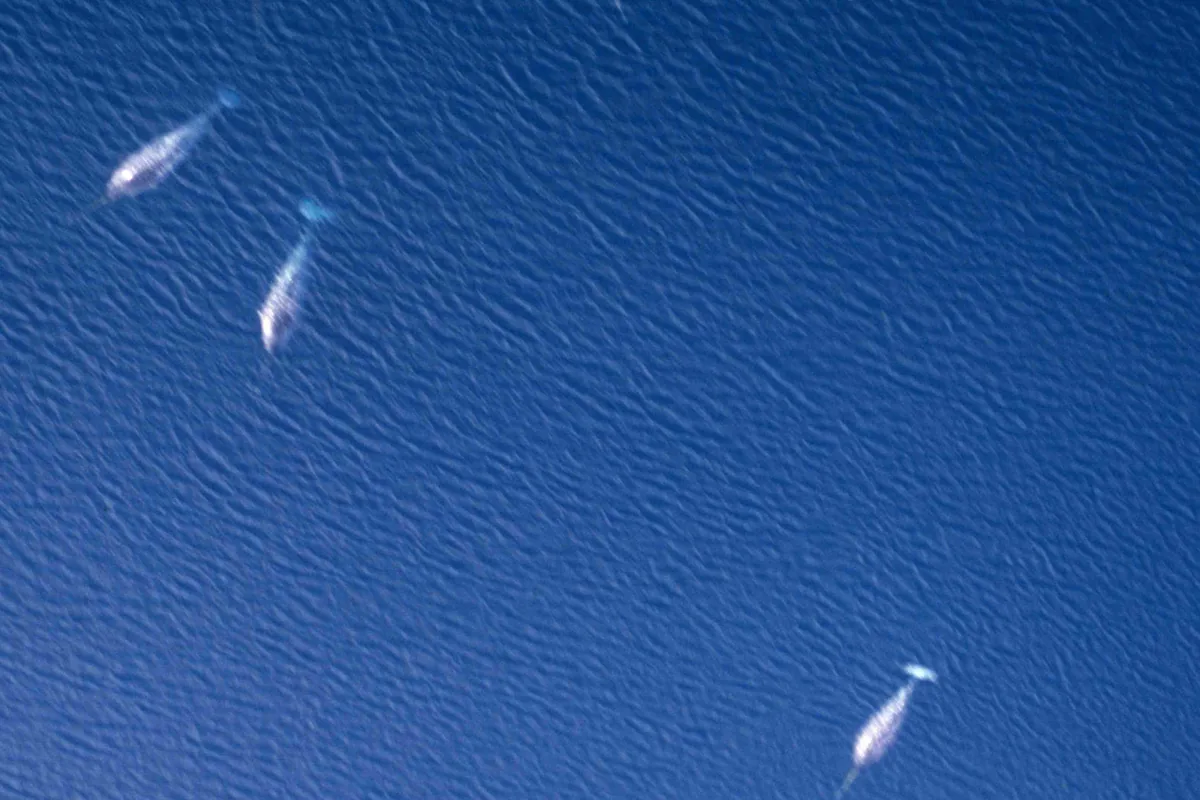
See all narwhal pictures & images →
Narwhals possess one of the Arctic's most distinctive dental systems. Unlike most marine mammals, adult narwhals have essentially no functional teeth within the mouth for chewing. Instead, most males develop a single elongated tusk that emerges from the upper jaw, piercing through the lip and extending outward as a prominent spiralled appendage. This remarkable tooth grows in a consistent left-handed spiral and can attain considerable length, earning the narwhal its renown throughout the polar regions.

The development of the iconic tusk is not universal across the species. While the single tusk is the standard configuration in males, a second tusk occasionally develops in some individuals. Females, though less frequently, may also grow a smaller tusk of their own. The absence of functional oral teeth reflects a feeding strategy fundamentally different from most other cetaceans. Lacking the ability to chew, narwhals instead rely on suction feeding to capture their prey, drawing in soft-bodied organisms and fish species, which they then swallow whole. This feeding method proves well-suited to the composition of their natural diet in Arctic waters.
The narwhal's unusual dental anatomy thus represents a remarkable evolutionary adaptation to life in the Arctic ocean. The inoperable mouth teeth and prominent external tusk work in concert with specialized feeding mechanics to enable successful foraging in the cold northern seas.
Sources: NOAA Fisheries — Narwhal; IUCN Red List — Narwhal (Monodon monoceros). Educational information only. See our sources & fact-check policy.
Frequently asked questions
Tusk origin of the narwhal teeth and tusk anatomy?
An elongated upper tooth, usually in males
Chewing of the narwhal teeth and tusk anatomy?
No functional chewing teeth; swallow prey whole
More in Narwhal
Explore more Arctic wildlife
Compare the narwhal with the beluga, bowhead, orca, walrus, and polar bear in our quick-facts table.
Compare Arctic species →