Narwhal mother and calf bond
See all narwhal pictures & images →
Narwhal calves begin life in a state of profound dependence on their mothers, a relationship that shapes their survival in one of Earth's most demanding environments. From birth, a calf swims alongside its mother in the frigid Arctic waters, nursing on milk exceptionally rich in fat and nutrients. This high-calorie sustenance is critical, as the developing calf must rapidly accumulate the thick blubber layer necessary to maintain body heat and withstand the extreme cold of its oceanic home.
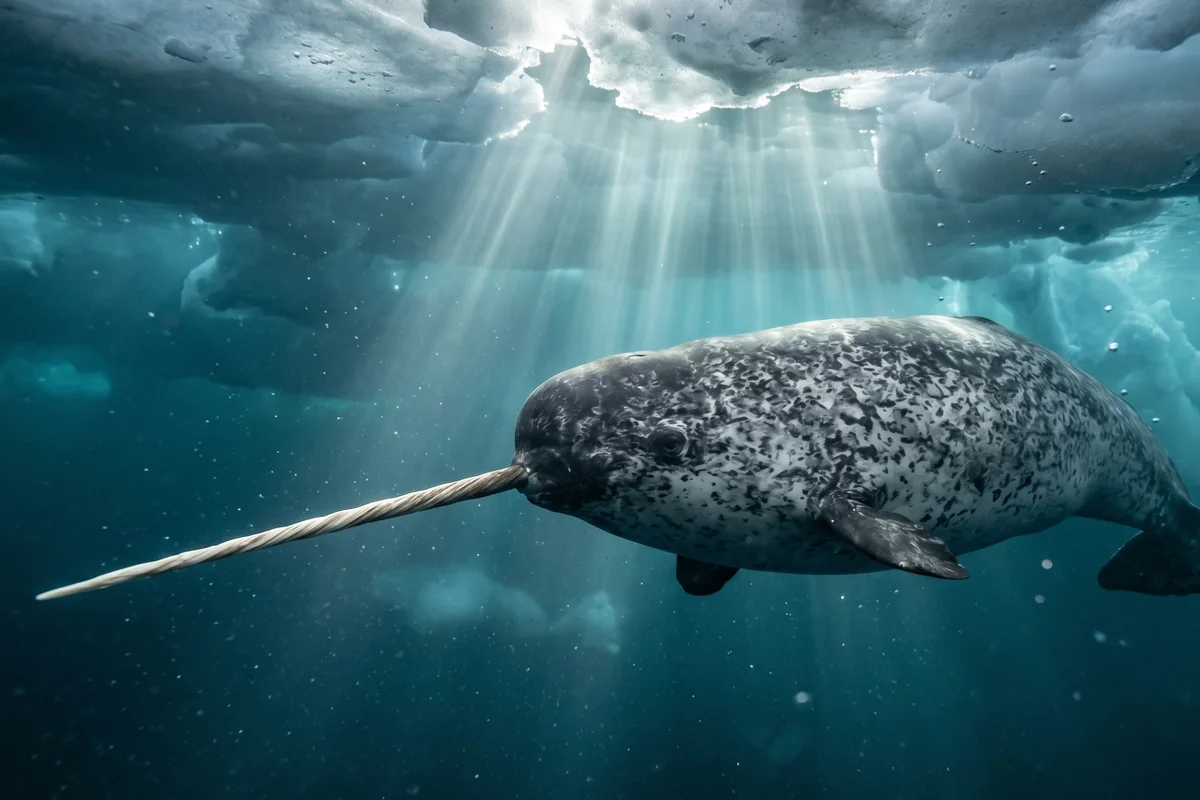
The mother-calf bond extends well beyond the initial weeks of life. Narwhals maintain prolonged nursing periods, during which mothers and offspring remain inseparable within their pod structure. Females caring for young calves are typically observed traveling together in the same regions, a clustering behavior that reflects both the demands of nursing and the vulnerability of developing animals in an unpredictable Arctic ecosystem.
This extended maternal investment corresponds directly to the narwhal's slow reproductive cycle. Females generally produce a single calf at intervals of several years, a pattern that contrasts sharply with faster-breeding marine mammals. Rather than compensating through quantity, narwhals invest heavily in quality—each calf receives years of dedicated care, feeding, and protection that substantially increase its chances of reaching reproductive maturity.
The strength of the mother-calf relationship thus represents a fundamental survival strategy for narwhal populations, one shaped by the Arctic's unique pressures and the species' conservative breeding biology.
Sources: NOAA Fisheries — Narwhal; IUCN Red List — Narwhal (Monodon monoceros). Educational information only. See our sources & fact-check policy.
Frequently asked questions
Milk of the narwhal mother and calf bond?
Rich, high-fat to build insulating blubber
Litter size of the narwhal mother and calf bond?
Usually a single calf
More in Narwhal
Explore more Arctic wildlife
Compare the narwhal with the beluga, bowhead, orca, walrus, and polar bear in our quick-facts table.
Compare Arctic species →