Narwhal feeding in winter
See all narwhal pictures & images →
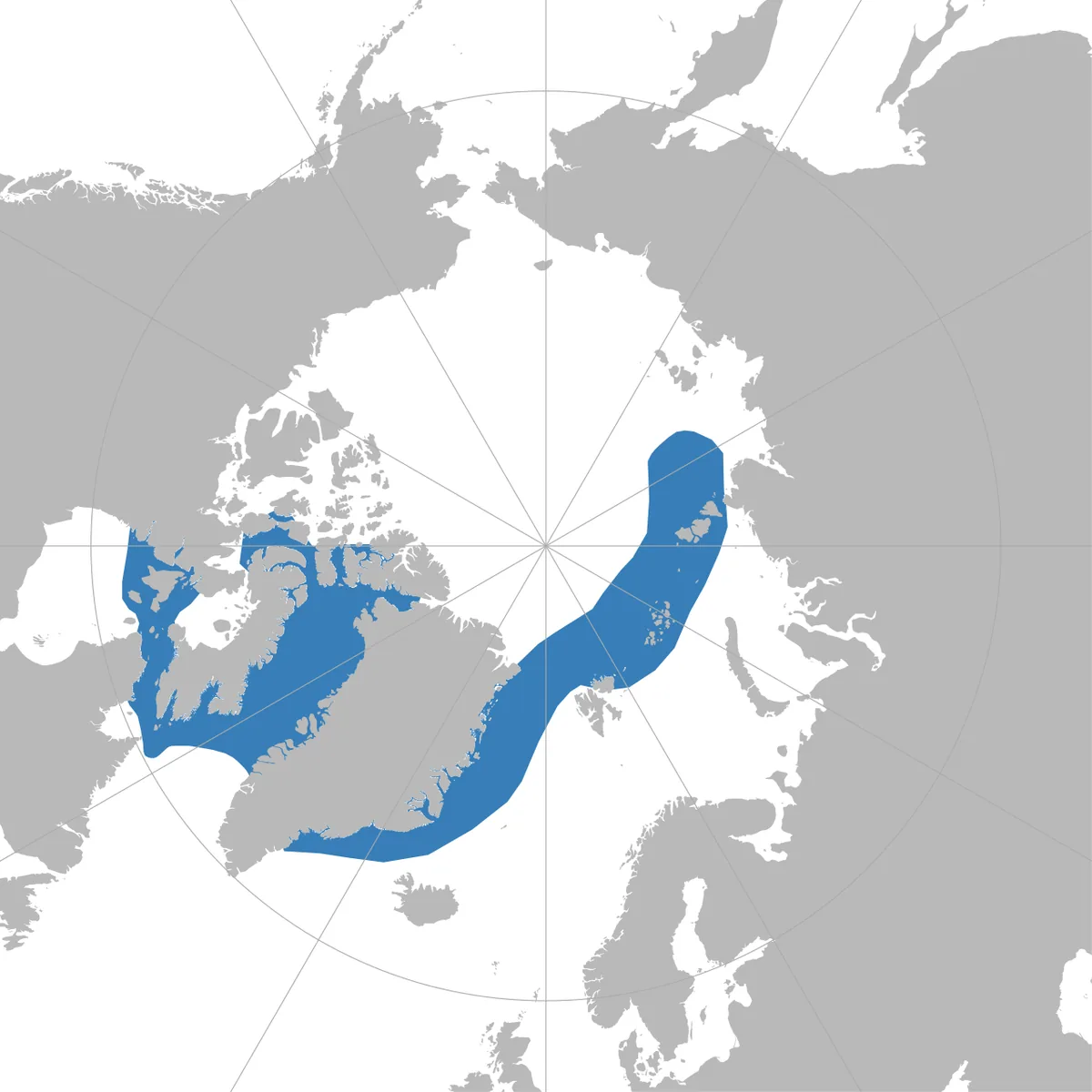
Narwhals spend winter in a landscape of perpetual darkness and extreme cold, yet this harsh season represents one of the most critical feeding periods in their annual cycle. Rather than retreating from Arctic waters, these medium-sized whales migrate to deep offshore grounds beneath the sea ice, where they engage in intensive foraging that sustains them through the year ahead. The timing and intensity of winter feeding suggests that narwhals accumulate a substantial portion of their annual energy stores during these months, building reserves essential for spring migration and reproduction.
The hunting strategy narwhals employ in winter darkness relies on sophisticated biological adaptations. Using echolocation, the whales navigate and detect prey in conditions where vision alone would be useless. They make repeated deep dives to reach concentrations of fish species including Greenland halibut and Arctic cod, remaining submerged for extended periods before surfacing at cracks in the ice to breathe. Their diving physiology—including oxygen-conserving mechanisms and metabolic adjustments—enables them to sustain these long submersions and the rigorous dive cycles required to exploit deep food sources.
Winter feeding in Arctic narwhals exemplifies the intricate relationship between marine predators and their environment. The seasonal abundance of specific fish species in deep water, combined with the whales' specialized sensory and physiological capabilities, creates an ecological pattern refined over millennia. Understanding this winter feeding ecology remains fundamental to assessing narwhal populations and the effects of environmental change on their survival.
Sources: NOAA Fisheries — Narwhal; IUCN Red List — Narwhal (Monodon monoceros). Educational information only. See our sources & fact-check policy.
Frequently asked questions
Key winter prey of the narwhal feeding in winter?
Greenland halibut, Arctic cod
Method of the narwhal feeding in winter?
Deep dives under ice guided by echolocation
More in Narwhal
Explore more Arctic wildlife
Compare the narwhal with the beluga, bowhead, orca, walrus, and polar bear in our quick-facts table.
Compare Arctic species →