Narwhal facts for kids
See all narwhal pictures & images →
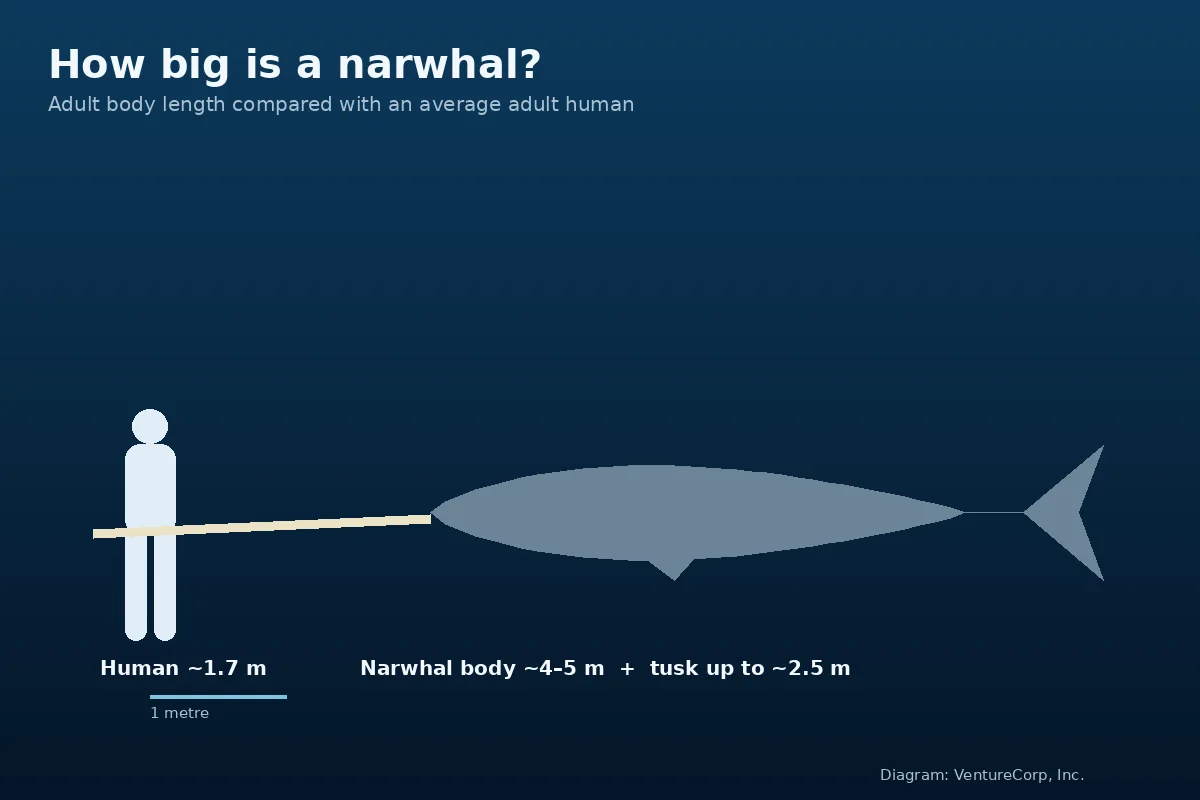
Narwhals are medium-sized whales that live in the Arctic waters surrounding the North Pole. They have earned the nickname "unicorn of the sea" because many males grow an exceptionally long, straight tusk spiraling outward from their head. This tusk is not a horn or bone—it is actually a giant tooth that can grow as long as a car. Females occasionally develop tusks as well, though it is less common. These remarkable teeth are thought to play a role in sensing their environment, though scientists continue to study their exact purpose.
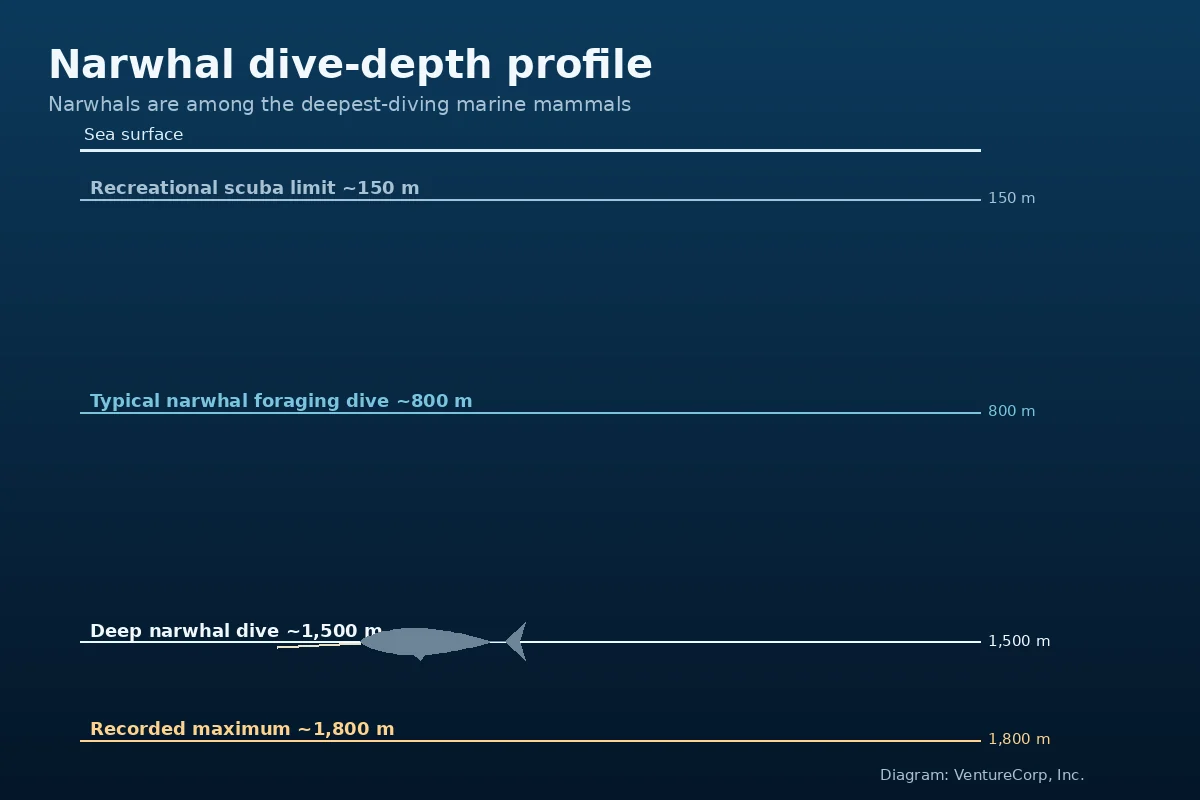
Life in the Arctic Ocean presents unique challenges that narwhals have adapted to meet. They live among floating sea ice and are powerful divers, capable of descending deeper than nearly any other animal to hunt for food such as Arctic cod. Unlike most whales, narwhals lack a dorsal fin—the large fin that runs along the back of many whale species. This absence is an important adaptation that allows them to swim more easily beneath the ice that covers their habitat.
Narwhals are born with soft, grey skin and remain unmarked at birth. As they mature, they develop the characteristic spotted pattern that covers their bodies, creating a distinctive appearance that becomes more pronounced with age. This transformation from solid grey calf to spotted adult is a natural part of their development in the Arctic ecosystem.
Sources: NOAA Fisheries — Narwhal; Smithsonian Ocean — Narwhal: The Unicorn of the Sea. Educational information only. See our sources & fact-check policy.
Frequently asked questions
Where they live of the narwhal facts for kids?
Cold Arctic Ocean near the North Pole
Their 'horn' of the narwhal facts for kids?
A long spiral tooth (mostly on males)
Baby name of the narwhal facts for kids?
Calf
More in Narwhal
Explore more Arctic wildlife
Compare the narwhal with the beluga, bowhead, orca, walrus, and polar bear in our quick-facts table.
Compare Arctic species →