Narwhal diving physiology
See all narwhal pictures & images →
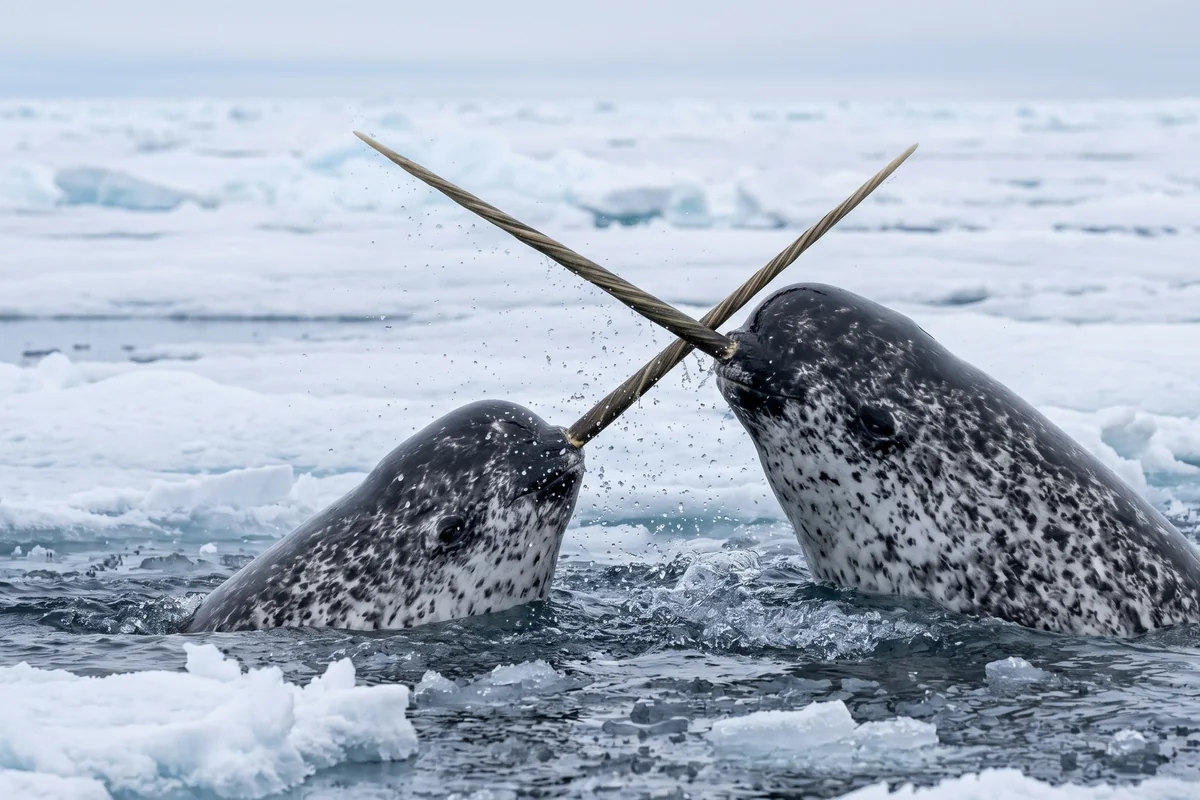
Narwhals are among the Arctic's most impressive deep divers, with bodies finely tuned for sustained submersion in extreme conditions. Their diving physiology relies on a suite of adaptations that allow them to remain underwater for extended periods while hunting in the cold, dark waters beneath Arctic ice. Like other deep-diving marine mammals, narwhals have evolved to store large amounts of oxygen directly in their blood and muscle tissue rather than depending primarily on air held in the lungs. This internal oxygen reserve is crucial for surviving the oxygen-poor environment of the deep sea.
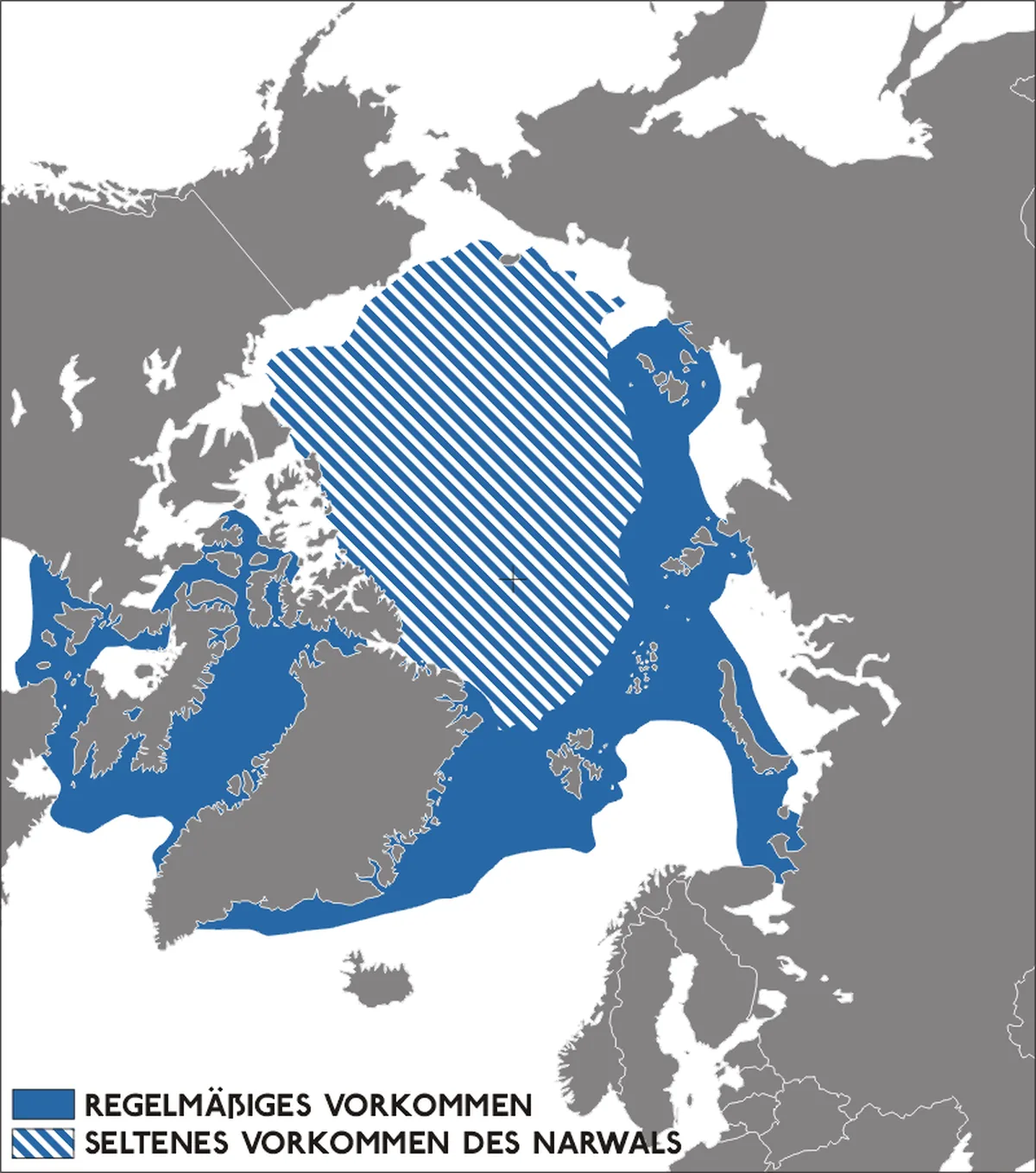
To make the most efficient use of their stored oxygen during dives, narwhals reduce their heart rate significantly once they submerge. This bradycardia—a slowed heartbeat—is a key conservation strategy that extends the oxygen supply and allows for longer bottom time. Their rib cages and lungs possess remarkable flexibility, enabling them to tolerate the crushing pressures found at depth without sustaining injury. These features work together as an integrated system, permitting narwhals to make repeated dives in pursuit of fish and other prey.
The combination of specialized oxygen storage, controlled metabolic responses, and pressure-resistant anatomy allows narwhals to exploit food sources that few other Arctic mammals can access. After each dive, they return to the surface to breathe and recover before descending again, cycling through this rhythm continuously during their foraging periods. These adaptations represent millions of years of evolution in one of Earth's harshest marine environments.
Sources: NOAA Fisheries — Narwhal; IUCN Red List — Narwhal (Monodon monoceros). Educational information only. See our sources & fact-check policy.
Frequently asked questions
Oxygen storage of the narwhal diving physiology?
Mostly in blood and muscle, not lungs
Dive response of the narwhal diving physiology?
Reduced heart rate to conserve oxygen
More in Narwhal
Explore more Arctic wildlife
Compare the narwhal with the beluga, bowhead, orca, walrus, and polar bear in our quick-facts table.
Compare Arctic species →