Narwhal blubber and cold adaptation
See all narwhal pictures & images →
Narwhals are among the Arctic's most specialized marine mammals, possessing physiological adaptations that allow them to thrive in some of Earth's coldest waters. The most critical of these adaptations is a thick layer of blubber situated beneath the skin. This insulating fat layer serves a dual function: it traps metabolic heat close to the body, maintaining core temperature in near-freezing Arctic seas, and it also provides an essential energy reserve during periods when food becomes scarce. The proportion of body weight composed of blubber varies seasonally, expanding considerably before winter months as the animals prepare for months of limited prey availability.
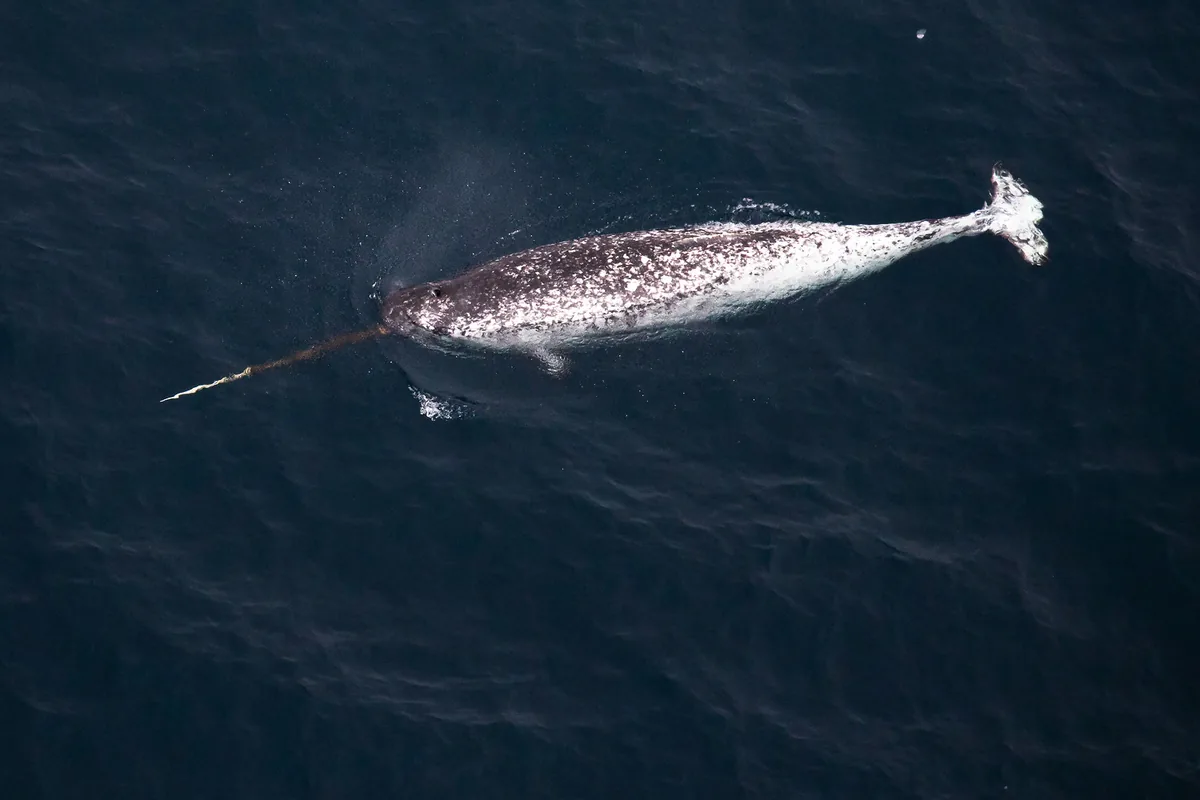
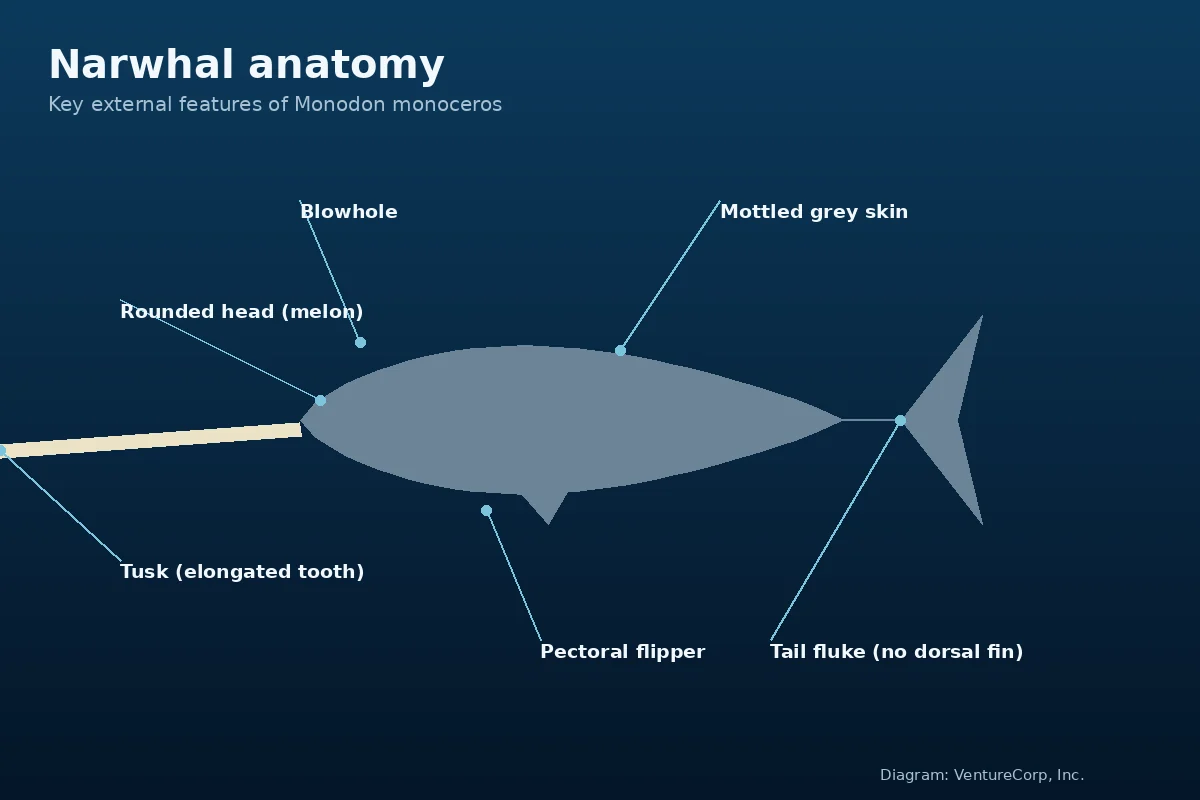
Beyond blubber insulation, narwhals possess other structural features that reduce heat loss and enhance survival in ice-covered environments. Unlike many whale species, narwhals lack a true dorsal fin. This anatomical absence is not a limitation but rather an adaptation, as the absence of a fin that would otherwise project above the body surface reduces overall heat dissipation to frigid air and water. The absence of a dorsal fin also provides a practical advantage in navigation: it allows narwhals to move more easily beneath sea ice during their year-round residence in Arctic waters.
These complementary adaptations—extensive blubber reserves paired with anatomical features that minimize heat loss—work together as an integrated system. This combination of physiological and structural characteristics makes the narwhal exceptionally well suited to its specialized niche as a permanent resident of the Arctic's most demanding marine habitat.
Sources: NOAA Fisheries — Narwhal; IUCN Red List — Narwhal (Monodon monoceros). Educational information only. See our sources & fact-check policy.
Frequently asked questions
Main insulation of the narwhal blubber and cold adaptation?
Thick blubber layer
No dorsal fin of the narwhal blubber and cold adaptation?
Reduces heat loss and aids under-ice swimming
More in Narwhal
Explore more Arctic wildlife
Compare the narwhal with the beluga, bowhead, orca, walrus, and polar bear in our quick-facts table.
Compare Arctic species →