How deep do narwhals dive
See all narwhal pictures & images →
Narwhals are among the Arctic's most impressive deep-diving marine mammals. These medium-sized cetaceans routinely descend to considerable depths in pursuit of prey, navigating the frigid waters beneath seasonal sea ice to hunt species including Greenland halibut and Arctic cod. Their diving behavior is particularly pronounced during winter months, when darkness and cold water make the hunt for food both challenging and essential.
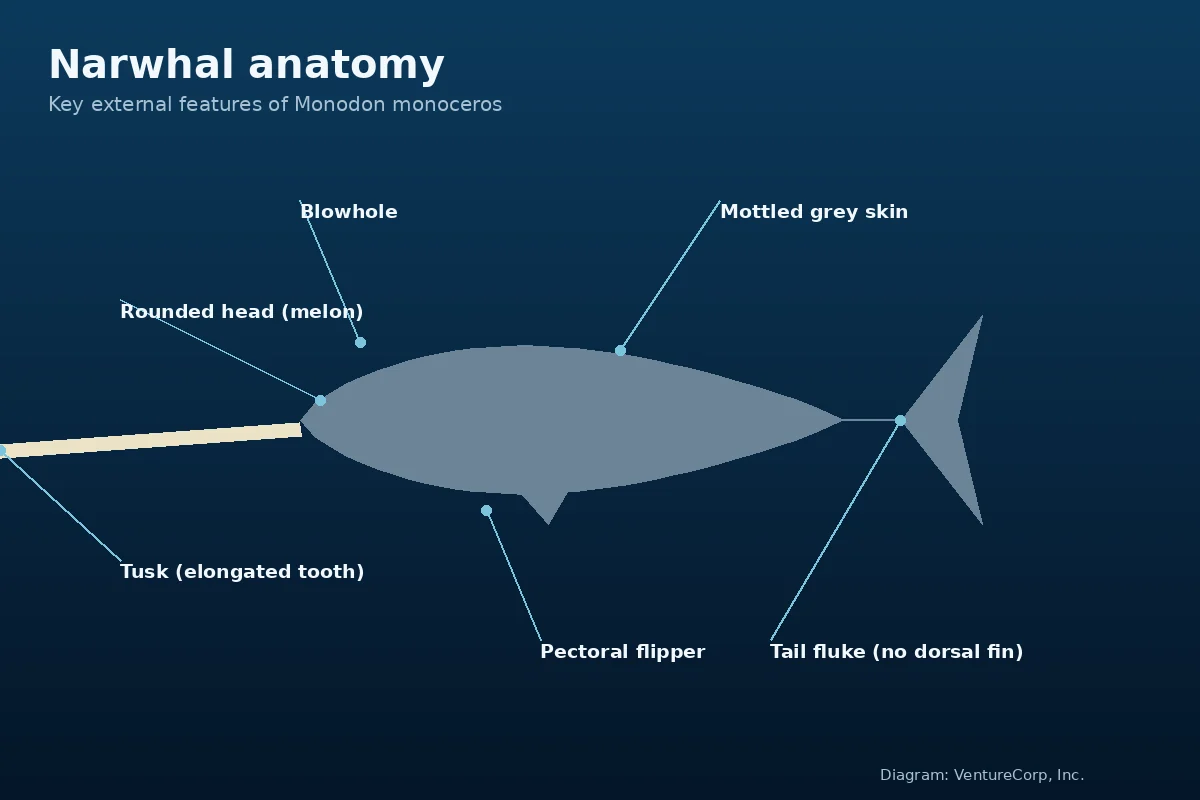
The narwhal's body is specially equipped for sustained submersion. Their flexible rib cages compress under pressure, and their muscles contain high concentrations of oxygen-storing compounds that extend the duration of each dive. These physiological adaptations allow narwhals to remain submerged for extended periods while foraging on the seafloor and in mid-water zones far below the surface.
Deep diving is not an occasional behavior for narwhals but rather a central feeding strategy, especially when winter ice coverage limits their access to shallow waters. The species' dependence on these deep dives reflects its role as a specialized hunter of cold-water prey in one of Earth's most extreme marine environments. Understanding narwhal diving capacity provides insight into how Arctic marine mammals have evolved to thrive in an ecosystem of limited light, extreme cold, and seasonal resource scarcity.
Sources: NOAA Fisheries — Narwhal; IUCN Red List — Narwhal (Monodon monoceros). Educational information only. See our sources & fact-check policy.
Frequently asked questions
Why they dive deep of the how deep do narwhals dive?
To reach prey like Greenland halibut and Arctic cod
Adaptations of the how deep do narwhals dive?
Flexible rib cage, oxygen-storing muscle
More in Narwhal
Explore more Arctic wildlife
Compare the narwhal with the beluga, bowhead, orca, walrus, and polar bear in our quick-facts table.
Compare Arctic species →